For law enforcement officers, a tactical flashlight is far more than just a lighting tool. It is a critical piece of duty gear that supports scene assessment, suspect identification, emergency signaling, and personal safety. Unlike ordinary consumer flashlights, law enforcement tactical lights must stand up to harsh field conditions, rapid deployment, and high-stress scenarios. This guide breaks down the core factors to help you select the right tactical flashlight for police and law enforcement use.
1. Core Brightness & Beam Performance
Lumen output is the first consideration, but beam quality matters equally.
- Brightness: 800–1500 lumens is the most common working range for daily patrol. High brightness creates temporary visual disorientation for suspects for officer safety. Avoid over-chasing ultra-high lumens at the cost of shortened runtime.
- Beam Type: Prefer a balanced combo of focused spot beam + wide flood beam. The spot beam delivers long-distance illumination for searching alleyways, wooded areas or vehicle compartments; flood light covers wide near-field scenes for room clearing.
- Strobe Mode: A must-have law enforcement feature. Disorienting strobe can buy precious response time during confrontations. Ensure the strobe function can be activated quickly with one hand.
2. Durability & Environmental Resistance
Field work involves drops, bumps, rain, dust and extreme temperatures. Reliability cannot be compromised.
- Housing Material: Aerospace-grade aluminum alloy is the standard. It is lightweight, scratch-resistant and impact-resistant.
- Impact Resistance: Look for a drop rating of at least 1.5–2 meters, able to survive falls from waist or chest height.
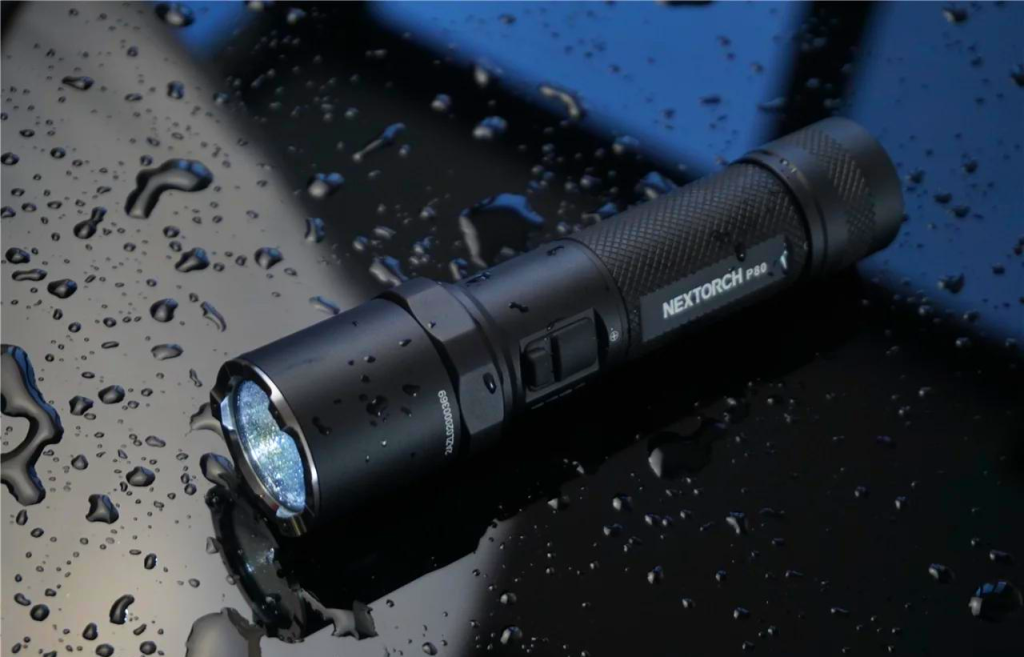
- Waterproof Rating: Minimum IP65, better IP67. It can withstand heavy rain, splashes and brief submersion during rainy night patrols or accident scenes.
3. Power Supply & Runtime
Long, consistent runtime is essential for all-shift patrols.
- Battery Type: 18650 rechargeable lithium-ion battery is the dominant choice. It offers high energy density and stable discharge for high-power tactical lights.
- Charging Option: Type-C direct charging is recommended for convenience. Officers can recharge easily in patrol cars or stations without extra chargers.
- Battery Capacity: Select capacity according to your usage scenario. 2200mAh / 2600mAh / 3500mAh options fit different runtime requirements. Spare batteries are strongly advised for long missions.
4. Operation & Ergonomics
Officers often operate the light with one hand while holding a firearm or other equipment.
- One-handed control: Simple, tactile side or tail switch. Buttons should be easy to feel with gloves on.
- Size & Weight: Compact and lightweight design. Bulky heavy flashlights cause fatigue after hours of carrying on duty belts.
- Accessory Compatibility: Check if it supports weapon mounts, lanyards or holsters for duty belt carry.
5. Safety & Practical Features
- Anti-roll design: Knurled textured body prevents rolling away when placed on uneven surfaces.
- Heat dissipation: Good thermal management prevents overheating during long high-brightness use.
- Regulated output: Maintains steady brightness instead of dimming as battery drains.
6. Common Pitfalls to Avoid When Buying
- Blindly chasing maximum lumens: Higher lumens drain batteries faster and may cause excessive heat.
- Ignoring waterproof & drop ratings: Cheap lights fail quickly in rainy or rough field environments.
- Poor switch design: Buttons that are hard to operate with gloves lead to failed activation in emergencies.
- Low-quality batteries: Non-matching batteries cannot sustain high current discharge and risk leakage or explosion.
Conclusion
The best tactical flashlight for law enforcement balances brightness, beam control, rugged build, reliable power supply and easy one-handed operation. Match specifications to your actual mission needs — whether routine patrol, search & rescue or tactical response. Prioritize verified durability and consistent real-world performance over exaggerated marketing parameters.